Craig Scarborough
Ferrari have made a remarkable resurgence to challenge the dominance of Mercedes approaching the half way mark of the 2026 season.
Wins for Lewis Hamilton in Spain and Charles Leclerc in Britain have made their rivals seriously sit up and take notice. So what’s behind this dramatic turn around?
A disastrous 2025 season was abandoned reasonably early on in order to focus on the very different chassis and power units for 2026.
This led Ferrari to find its own direction for the performance of the new car, one not entirely followed by other teams.
When a designer plans the car for the following season, they don’t just go and start designing various parts and see where the results take them.
Instead, the process starts with thousands of lap time simulations, trading power, driveability and downforce/drag to see what combination gives the best results over a lap and around every circuit.

This gives the engineering teams a target to aim for when designing their part of the car.
There’s no one perfect answer. Every team will have opinions on their approach and interpreting the results.
For Ferrari, the result came out different to the other teams and PU manufacturers. This at least partly explains the teams rise to second in the competitive order from the start of the year.
 Although further credit has to be given to Ferrari for starting the season with a reliable power unit and balanced handling – something its rivals have struggled with in the early races.
Ferrari’s magic formula is based around how the car generates lap time. This is different this year because of factors like the energy management of the new PU, the change in underfloor design and the introduction of straight-line mode (SLM).
Thus, Ferrari has opted for a high downforce approach, accepting high level of base drag because the use of SLM.
Having the lower drag in SLM with their Macarena rear wing allows them to create better lap time, as the drag doesn’t matter in the corners and the rear wing offsets that on the straights.
This is borne out by the PU strategy, with their smaller turbo employed for better drivability, with the trade-off of less power for straight-line speed.
Further underlining this high downforce/drag and lower power/less laggy power unit, is the exhaust flap, that Ferrari terms the Flick Tail Mode (FTM), this may sap some peak power through back pressure but is offset by providing yet more downforce for the corners.
Their rivals have opted for max power and lower downforce/drag, contrasting Ferrari’s approach.

Both may well generate the same lap times on average around the different visited. It’s clear from speed and sector analysis that Ferrari have the edge in corners but are slower on the straights.
On balance this may work. But slow ultimate speed will adversely affect tracks with long straights and lead the drivers more vulnerable to overtake in the races.
So, why are Mercedes ahead on most tracks then? Arguably the difference is in better energy management from the hybrid side of the PU.

Energy management doesn’t give the driver more peak power but does mean the hybrid will be delivering its ~500hp more of the time and less lap time is compromised for energy recovery modes.
But the larger turbo for more peak horsepower from the combustion engine means drivability is a bigger obstacle.
This can best be seen at the race starts, in the first races Ferrari’s engine had better pick up and allowed an easy jump into the lead off the lights.
LIGHTS OUT IN BARCELONA!!
🎥 Watch the race start #F1 #BarcelonaGP pic.twitter.com/5DvjLJWi99
— Formula 1 (@F1) June 14, 2026
But the FIA accepting a 5s preparation phase before the start light sequence and intense development on behalf of the PU manufacturers has also played a factor.
Mercedes in particular has nullified Ferrari’s advantage in this area.
So, it’s equally likely that similar development on the engine management has improved general engine response and reduction in turbo lag, further reducing Ferrari’s strategic advantage.
Perhaps the bigger issue for Ferrari’s corner speed approach is tyre management.

If you find speed in the corners and not on the straights then you are relying on the tyre more than the reverse approach.
Tyre management has been a lesser factor in the races earlier this year. But this is largely masked by all the other factors introduced by the new rules.
Barcelona and Spielberg showed heat and tyre use is still a problem in F1. While Ferrari may have won in Spain, their tyre degradation (deg) was greater than Mercedes.
Then again in Austria, rear tyre temperatures were a problem for both drivers. Work around the rear wheels with the wheel bodywork and brake ducts has been tried to bring down tyre temperatures.
At Silverstone it went as far as fitting oversized rear duct scoops and outlets, simply to gain cooling to the wheel to lower rear tyre temepratures.

This comes with yet more drag, but tyre degradation is an overriding factor in the race and rewards this trade off.
The early season problems cannot be covered without talking about brakes.
Braking is different this year with the need to recover more energy from the rear axle, requiring more rearwards brake bias and more time on the brake pedal.
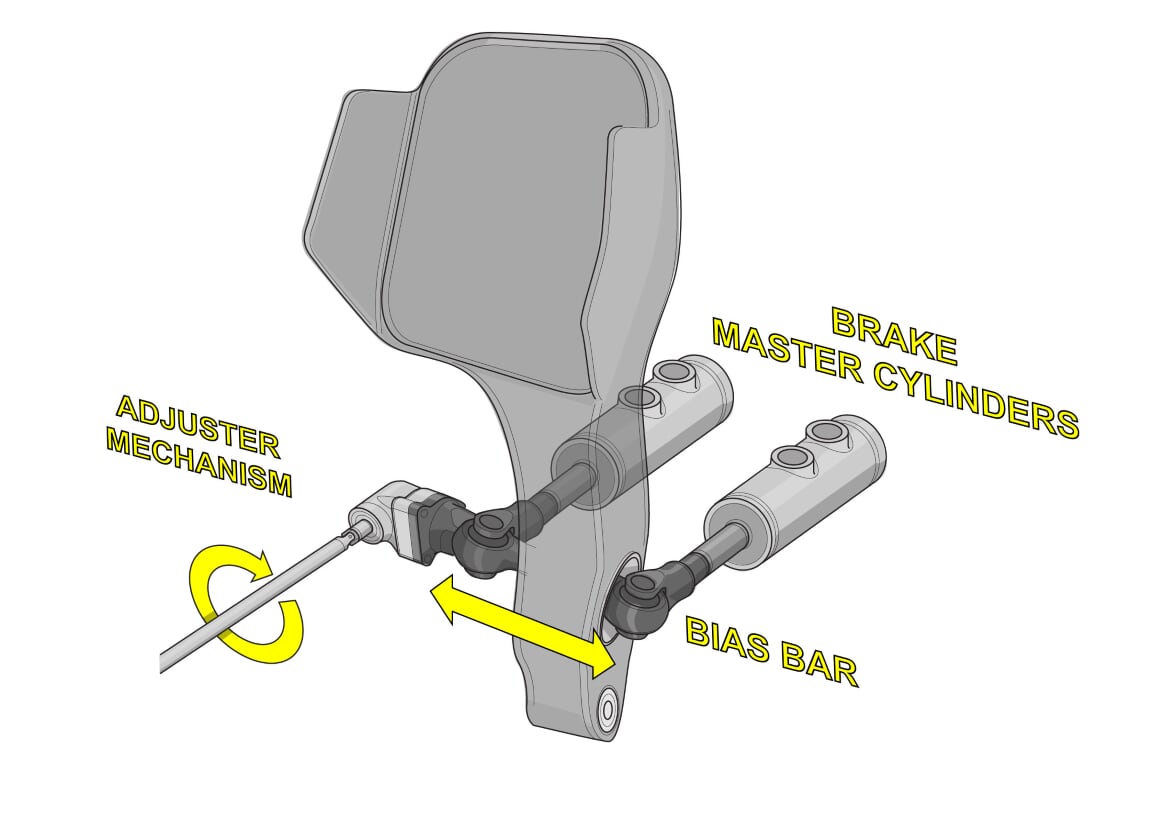
As all of the energy recovery is on the rear, the rear disc brakes are doing very little, while the front brakes have more potential stopping torque it can’t be used as the brake bias front to rear has to be maintained.
Therefore, both front and rear disc brakes get cold, the carbon fibre discs do not like running cold, as they do not have the same braking torque and can be become grabby on initial application.
It was clear brake issues have blighted both drivers, with Hamilton more affected last year and Leclerc this year, especially in Monaco.

The solution for both drivers is a common solution for cooler wet weather races, different discs and pads.
While Ferrari use Brembo braking systems from the disc to the caliper and master cylinder, the introduction of Safran Carbone Industrie (CI) brakes for Hamilton initially and then Leclerc in Austria is a seismic change.
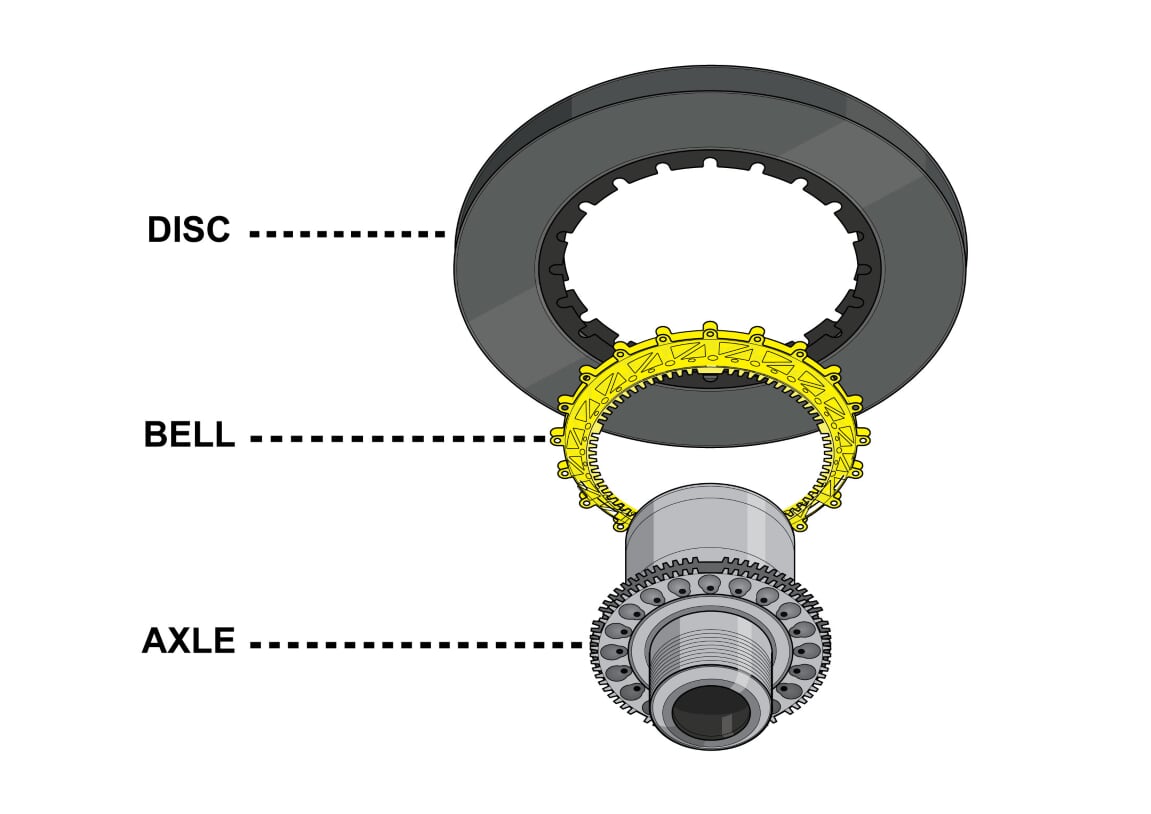
The CI material is better at dealing with cooler disc temperatures, hence its preference for wet races.
It does not have the initial bite of the Brembo material but will be more consistent when hybrid energy management is forcing the brakes to be underused and run cooler.

Updates and change in direction?
If Ferrari has this underlying set up strategy, that causes it to be slow on the straights and degrade its tyres, then why is it so close to Mercedes in qualifying, races and, crucially, in the championships?
Well, Ferrari have been aggressive with their upgrade strategy, so far this strategy is still following the high downforce/high base drag philosophy, but that might be changing.
Every aspect of the car’s aero has been upgraded, from front to rear, sometimes several versions of a part have come and go.

Quite literally underpinning the car’s aero performance is the floor. And this has been repeatedly updated since Miami.
Most of the detail underneath can’t be seen, but the external changes are still influential and unique.
The bib and splitter area under the raised chassis have seen changes in the edge shaping and also the vertical support.
Inside the fairing around this support is an optical sensor to measure road speed and direction. Outwardly unimportant this fairing has seen three versions since the season’s start!

An area definitely more important is the floors leading edge, rules the teams up to 5 teeth, technical termed Floor leading edge devices (FLEDs), these help expand airflow out towards the floors edge to create aero load in the middle of the car.
Ferrari were quick to reinterpret the rules and fitted a horizontal slat across these teeth.
In Barcelona the slat was made even more substantial across the FLEDs, acting like a leading-edge slat on an aircraft wing, to redirect and maintain flow over the floors leading.

To this side of this area, the complex floorboards used to manage the front tyre’s wake around the car have been slowly more extreme, with the early season version having one leading vertical element now increased to three.
While the horizontal slats and the scrolled floor edge underneath them have all been revised.
Inline with most of its rivals the floor deck area ahead of the rear tyre has been reworked, becoming one of the most complex sections on the car.
 These slots help direct airflow around the rear tyre, keeping its wake from obstructing the diffuser, while also increasing airflow through the outer area of the diffuser itself.
More slots and more vanes show that the teams are increasingly confident in understanding the airflow in this area.
There are two area where Ferrari really surprised the paddock this year, once with the ‘macarena’ rotating SLM rear wing and the exhaust’s flick tail.
Ferrari has raced a FTM since the season’s start and with several updates, its still the most complex and integrated version.
Its rivals have copied the concept but are limited by the regulations and their gearbox differential position in following the same direction as Ferrari.
But from here, we can start to see where Ferrari is going with future development, which appears to be away from the high base drag concept it started the year with.
Perhaps learning from its rivals and understanding the limitations their initial strategy has, the team are starting test and introduce solutions to reduce the inherent drag of the car.

Of course, any underfloor development provides downforce, but comes with a low drag penalty, but in Austria the team used its rookie driver to run with some lower drag solutions.
Now, these may be for upcoming low drag tracks such as Spa & Monza but could suggest a change in direction.
The car ran without the full flick tail in front of the exhaust tailpipe and with simpler wakeboard with just the early season single vertical vane.
 Then we have seen the new sidepods, these feature much larger, Ferrari classed them ‘inflated’, shoulders.
This isn’t a cooling solution, but this area of the sidepod helps push the front tyre wake away from the car.
Having the front tyre wake run over the rear aero surfaces upsets aero performance and costs drag. Again, a signal to the shift away from the initial car concept.

Power Unit and ADUO
Having described the power unit’s performance above, its clear Ferrari have done a good, but not the best job with the PU.
Any advantage to the drivability of the smaller turbo is now defunct as the other power units recover their early season deficits.
The FIA introduced a system to control a runaway leader with the new power unit regulations and provide an upgrade path those with poorer combustion engine performance.
This is known as ADUO, additional development and upgrade opportunities. It uses FIA sensors to measure the combustion engine’s peak power to create a table of the best to worst of the turbo V6s.
Red Bull powertrains came out on top, with Mercedes then Ferrari lagging behind.
This is far from a perfect system and goes to show that peak power isn’t a great measure for PU performance, as drivability and energy management are perhaps even greater factors.
CHECK OUT OUR GUIDE TO THE 2026 FORMULA ONE POWER UNIT
 Regardless, Ferrari should be surprised to see themselves third in the list, as their small turbo approach knowingly trade peak horsepower for other gains.
What ADUO does allow Ferrari to do is change its PU strategy and overall car concept.
Ferrari has been allocated two upgrade tokens and additional development resources (in time & money) to change its PU.
So far Ferrari are known to have brought a Battery upgrade. This will not reverse the peak horsepower strategy, as a more effective battery will not give more horsepower.

But it may also perhaps allow for more and quicker energy recovery, giving the driver more available energy and spending less lap time recovering it.
The open secret, however, is the second token will be spent on a new turbo with unsubstantiated talk of a new fuel and charge air cooler (intercooler).
A large turbo should bring Ferrari back on terms with Mercedes and Red Bull on peak power, but this might come with the risk of less drivability.
SHOP THE LEWIS HAMILTON OFFICIAL SCUDERIA FERRARI RANGE HERE
There may even be problems with race starts if they don’t get the development right first time – just as their rivals did in the opening races.
These 2026 power regulations are very prescriptive in the design of the power unit components. There are size, material and weight limits for the turbo.
But, in reading the regs, it’s a surprise that the size of both of the turbo’s wheels are tightly defined, with just 15mm between the minimum and maximum!

Next phase of the season
Ferrari’s season approach has left it trailing Mercedes, then ahead of Red Bull and McLaren.
Yet both of its chasing rivals are catching up in performance.
The Miami-Austria upgrades have brought a chunk in performance and caught the eyes of their competing team principals.

In the next run of races we will see if Mercedes are vulnerable, or if Barcelona was a blip, exacerbated by Antonelli’s retirement and Russell’s Austria win closing up the championships?
The problems on Ferrari’s plate are; straight-line speed, energy management, tyre management and there’s still the brake question to be crossed off.
ADUO with a new battery and the larger turbo might be the lifeline to bring Ferrari on terms or even ahead, the car will then need to adapt to the switch towards lower drag.
As Toto Wolff keeps mentioning, how much of their budget has Ferrari used to get to this position? Is there time in the wind tunnel and cash in the bank to continue this rate of development?
But perhaps Ferrari have already spent the resources on the right solutions; a better floor, the new sidepods and a low-cost option of dropping the FTM?
Even with this approach its rivals are underdeveloped, Mercedes haven’t had a big upgrade yet and they have an ADUO token to spend.
Red Bull are coming on strong with recent aero updates and McLaren have hope for better reliability with the new Mercedes Battery and a rotating rear wing to bolster its top speeds.
This season is likely to see these teams leapfrogging each other as substantial upgrades come to the track, a lot will unfold before the championships are decided.
It’s an ever evolving game of cat and mouse on the technology front and it will be intriguing to see who ultimately comes out on top.
TAKE THE F1 TRACK TO YOUR HOME WITH THE ULTIMATE RIGS FROM FANATEC


 Fraser Masefield