

 Fraser Masefield
Stéphane Ratel is the founder and CEO of SRO Motorsports Group: the organisation that has done more than any other to shape modern GT racing.
From the BPR Global GT Series in the 1990s to today’s GT World Challenge powered by AWS, Ratel has spent more than three decades developing categories, championships and events all around the world.
The terminology can be confusing: GT1, GT2, GT3 and GT4 have all existed at different points, but their place in the hierarchy has changed over time.
Today, GT3 is the leading international customer racing category and the highlight of GT World.
SRO also promotes GT2 and GT4 as well as the GT1 Sports Club – which is a non-competitive track day series.
It’s important to understand that GT World is not just a single world championship. Instead, it’s the name for SRO’s global GT platform, taking in series in Europe, America, Asia and Australia.
 SRO works closely with the FIA on technical regulations and other programmes, but all the different GT World championships themselves are organised and promoted by SRO.
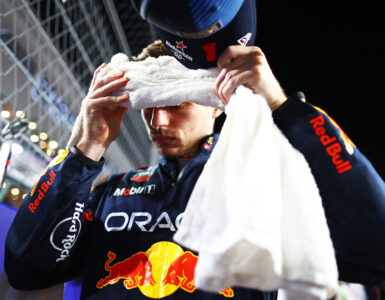
And Formula 1 superstar Max Verstappen has definitely helped bring a new audience to GT3, both as a driver and team owner.
After winning on his GT3 debut at the Nürburgring’s Nordschleife in 2025, he returned in 2026 as part of the Verstappen Racing line-up for the epic Nürburgring 24 Hours in a Mercedes.
His performance was stunning, putting GT racing on the map once more.

Motorsport Technology recently sat down with Ratel to discuss how GT World evolved, why GT3 has become so successful, the role of Balance of Performance, and where the sport goes next.
MT: Hello Stéphane. GT World is suddenly big news again, with Max Verstappen getting involved and speaking so positively about GT3.
You must be pretty proud of how far it has come since you started your company back in 1995.

SR: “A pleasure! Well, like most things, it wasn’t an overnight success. Jim France, the CEO of NASCAR, once told me: ‘We are an overnight success story that took three generations!’
For us, it didn’t quite take three generations, but it took a lifetime of work.
My company was founded in 1995, but the story really began in 1992 and, more importantly, in 1994 with the launch of the BPR Global GT Series.
Ever since then, the story has continued through a number of different names and formats.
We went from the BPR Global GT Series to the FIA GT Championship, and then later the FIA GT1 World Championship.
 In parallel, the Blancpain Endurance Series was launched in 2011 and ultimately evolved into today’s series. Now we have GT World Challenge, which we shorten to GT World.
The names and structures have changed, but the core concept – racing spectacular GT cars with strong customer team involvement – goes right back to what we began building in 1994.
Yes, it took time, but let’s not forget that we started from a blank piece of paper.
If I compare it to what my mentor and the biggest promoter of all time, Bernie Ecclestone, did – he didn’t actually start from a white piece of paper.
TAKE THE GT WORLD TO YOUR HOME WITH THE ULTIMATE SIM RIGS FROM FANATEC
 He packaged and made a successful business out of a category that was already an existing and popular championship.
Formula One was already drawing major crowds, but he was the one who made it financially rewarding.
By contrast, we started from a completely blank piece of paper when it came to GT racing category, which had largely disappeared with the end of the GT European Championship.
I think it was 1979 or something like that. You had a couple of GT cars competing at Le Mans in the early 80s, but that ended and then you only had prototypes.

So when we restarted GT racing in 1994, the category had been totally absent from the international stage for more than a decade.
That meant we had to restart from zero. So yes, it’s taken some time before global recognition; before really attracting crowds.
The exception was perhaps our traditional CrowdStrike 24 Hours of Spa, which was always big event in itself, but didn’t actually start off as a GT race because it was for many, many years a touring car event.
We only brought GT cars back to Spa in 2001, when the event became part of the FIA GT Championship.”

MT: That’s an incredible success story.
You mentioned Bernie Ecclestone, but you search Stéphane Ratel and you come across as one of the most influential decision makers in all of motorsport. You must be proud of that?
SR: “I’m pleased but I’ve been head down, pedalling hard for more than 30 years and you don’t really look back.
You always have the next step, the next ambition, the next championship, the next event in mind.
This is how we developed SRO. What’s certain is that we have not been like the other championship promoters.
SRO is a category developer, and in fact we have developed not just one championship.
 Instead, we have developed an entire category as a whole, which now includes almost 20 championships around the world.
Some of them are very professional, some of them completely amateur, some of them are global, some of them continental, some of them national.
And we also have a widespread number of licences because we licence the category we own to other Series promoters.

So, this means we have a network of events and championships, which actually makes me – and everyone else at SRO – category promoters rather than championship promoters.
We also have a third string, if you like.
We’re category promoters, we are championship promoters, and now we’re becoming event promoters too, which is something quite new that we were really doing only at Spa-Francorchamps before.
But with the growing popularity of our races, we have now embarked into promoting events that are attracting tens of thousands of people.
I’d say that’s the new chapter: the step that we’re really focusing on at the moment.”

MT: That certainly seems a huge undertaking for a sport with numerous categories. For someone coming to GT World from Formula One, can you explain the differences between GT2, GT3 and GT4 in a nutshell?
SR: “In every category, you need steps. What’s a bit confusing with us is that when we started, it was a bit more clear.
First, we had GT1: these were the most sophisticated and most extensively developed cars.
Then we had GT2, which was the next step down.
And then we had GT3, which was a new category I introduced 20 years ago.

GT3 was designed to be fast and spectacular like GT2, but much more cost-effective, with cars remaining closer to their road-going origins: basically, cars that were recognisably derived from road-going supercars.
So then we had three clear categories. In 2007, SRO added GT4.
This was the same concept as GT3, but for smaller and less powerful cars. If you want to understand GT racing, look at Porsche.

That’s the traditional benchmark. Starting with GT1 we had the Porsche GT1.
Next, GT2 is based on the Porsche GT2 concept of very powerful cars, typically around 650 to 700 horsepower, but with less aerodynamic performance than GT3.
M4 vs Mustang ⚔️
📺 https://t.co/8w9f2VploV#GTWorld pic.twitter.com/SEG7DTjXpP
— GT World Challenge Europe Powered by AWS (@GTWorldChEu) August 30, 2026
Then you have GT3, initially based on the Porsche GT3 which is at around the 500-horsepower benchmark.
Finally, we have the GT4: for example, the Cayman GT4, which is the smaller Porsche built for GT4 racing – although this is being replaced by the 911 GT4 shortly.
 So, you go GT1, GT2, GT3, GT4. What complicated things is that GT1 disappeared for the first time at the end of the 1998 season, as it was very a successful category that then imploded.
When it did, the second division, named GT2, replaced it as the leading class and was renamed just GT.
Then the FIA introduced another class for cars closer to their road car origins, a kind of a Group N category called NGT. So, in the early 2000s, you had GT and NGT for a couple of years.
Then came a new generation of car: the Lamborghini Diablo first, then the Lamborghini Murciélago and Ferrari 550 Prodrive.

And with these cars being more sophisticated, we brought back the name GT1, with the previous GT cars becoming GT2.
So, we had GT1, GT2, and then I introduced GT3 and GT4; which was all pretty clear again.
Unfortunately, at the end of the 2011 season, GT1 died again – part of the boom-and-bust cycle that’s common in motorsport.
At the same time the GT2 category evolved into GTE under the ACO/FIA framework used in the World Endurance Championship, while the equivalent class was known as GTLM in IMSA.

So, GTE and GTLM were evolutions of the former GT2, while SRO continued to develop GT3 and GT4.
After GT1 disappeared and GTE/GTLM later came to an end, GT3 became the leading global GT category. And that is basically where we are now.
Maybe it sounds a bit messy, but it’s just the natural evolution of things.”

MT: Wow! That is complicated indeed. And this is what Max is racing?
SR: “Exactly. It became the top category because it’s the most sophisticated.
And now there’s another new generation of GT3 cars coming, such as the new Toyota or the new AMG, which are even more sophisticated.

So basically, they’re going back to the spirit of the old GT1. Which means that really, if we wanted to put things back in order, we should call the current GT3 cars GT1.
The question is this.
Are the current GT3 cars really the new GT1? Or do you still reserve the GT1 name for hypercars like the Ferrari F80, Pagani Huayra R, Lamborghini SCV12, Bugatti Bolide; all these crazy track day cars that don’t race, but they exist.

In my ‘guardian of the temple’ role, I still believe that GT1s are cars that unfortunately don’t race, and that’s why we created what we call the GT1 Sports Club: track days for these amazing cars.”

MT: They exist, and for amateurs who own these, they can go and have fun?
SR: “Yes. For the moment, they are cars that are mainly sold to people as investments, as fantasies for going around the track and having fun, but it’s true that there’s not a championship for them.
In the end, they would be so expensive to run. It would be a dream to have them, but I tell you, it’s not easy to put a race programme together for them.”
Would you be able to handle the pressure? 👀
📍 Nürburgring
🗓️ 28 – 30 August 2026
🎟️ Link in bio!#GTWorld pic.twitter.com/QRaKeu4d5C— GT World Challenge Europe Powered by AWS (@GTWorldChEu) August 16, 2026
MT: So let’s go back to the man Verstappen. Why do you think he enjoys this racing in this category so much?
SR: “I’ve had the opportunity to answer this question many times.
Basically, going back deep in the history of motorsport, the FIA created two championships.

One to prove you’re the best driver of a ‘cigar on wheels’ – largely made by small manufacturers or teams who created special cars for their drivers.
And then they created the World Manufacturers’ Championship, which was long distance racing.
Why long distance racing? Because at the time, a good car was a car that lasted – cars simply didn’t have the same level of reliability as we take for granted today.
So, this was important promotion for them. And this manufacturers’ series essentially became sports car racing, while the main driver’s championship was Formula One.

But of course this all evolved, and now you also have a manufacturers’ championship in Formula One.
As we all know, Formula One is perhaps essentially the world engineering championship these days.
And you can be the best driver in the world, but if you’re not in the right car in the right season, it’s going be difficult to become world champion.
And I truly believe that; even though drivers still have a huge importance in F1, as Max has proven a number of times.

So back to our GT championship.
With our BoP [Balance of Performance], we’re managing to put 10 different manufacturers, or 10 different brands, on a very equal footing in terms of performance.
TAKE THE GT SERIES TO YOUR OWN HOME WITH THE ULTIMATE RIGS FROM FANATEC

This means that the world of GT racing today is actually a bit like running a one-make series. In the Porsche Supercup, the driver will always make the difference.
With us, it’s the same. I haven’t asked him, but I believe this is possibly what has attracted Max here. He has this feeling, he’s passionate and he’s very, very competitive.
I think he has competition deep down in his very DNA. He will want beat anybody in equal machinery; same for Valentino Rossi.

They’re both exactly the same kind of competitors at heart.
GT racing offers you a platform in which you can make the difference, and that would be my explanation – but the best thing is to ask him!
As well as that, the cars look good and you have big grids.

There’s a very high level of competition because if you look at the grids we have in Europe – whether it’s at the Nürburgring, Spa, or elsewhere in GT World – you have grids of up to 40, 50, 60, or even 70 GT3 cars at Spa.
And you have eight or nine manufacturers represented, many through factory-supported teams, with a large number of factory drivers. It’s a very high level, and that’s what the drivers like to find.”

MT: You mentioned Balance of Performance. How does this work exactly? I mean, I was watching the 24 hours of Nürburgring, and you get some crazy closing speed differentials in these cars, some frightening passes by Max with these slower drivers.
SR: “It’s very different there.
Don’t forget that the Nürburgring 24 Hours is a multi-class event and you go from GT3 cars to the real old crowd favourites, like the Dacia Logan which is – I don’t know – half a minute, perhaps a minute slower around the track?

So you naturally have huge speed differences, which maybe adds to the attraction. In typical SRO-run championships, we always segregate the classes.
And the CrowdStrike 24 Hours of Spa, for example, is exclusively for GT3 cars, so you really don’t have the same speed differences.”
I got overtaken by Max Verstappen 👀 pic.twitter.com/EoJA9JVEmi
— Steve Alvarez Brown (@_SuperGT) March 22, 2026
 Craig Scarborough

 Anthony Durkin
