

 Craig Scarborough
Formula E raced around the streets of Monaco with its Gen3-evo car for the last time, Oliver Rowland taking victory in race 2.
Next season, the all new Gen4 car will race across the world.
In the principality, it is suggested the 600kw (805hp) all-wheel drive electric racecar could be quicker than F1, Formula E is changing!
DC gives his verdict 👀
It’s safe to say he’s never driven a car like this one 😉#FormulaE #Motorsport #GEN4 pic.twitter.com/B23vL2iZsU
— Formula E (@FIAFormulaE) May 17, 2026
In its relatively brief 12-year life, Formula E has made huge rides in performance with its electric power train and standardised chassis.
The Gen4 car was revealed to the public at Paul Ricard last month. This is a step change in the category’s performance.
The series will be racing with a maximum of 600kw delivered to all four wheels. This is a serious hike in its power output.

But it is not just the power train that is being developed. The car is changing too and with it, so too is the nature of how Formula e goes racing.
With all of this performance, from power train, aero, tyres and chassis, will be a new type of track for the series as it out grows some of its tighter street circuits.

Formula E chronology
Its first season was in 2014. When the Gen1 car appeared, it was both a spec chassis and a spec powertrain.
Producing a maximum of just 230 kilowatts and weighing 900 kilograms, the car lacked not just performance, but also endurance.
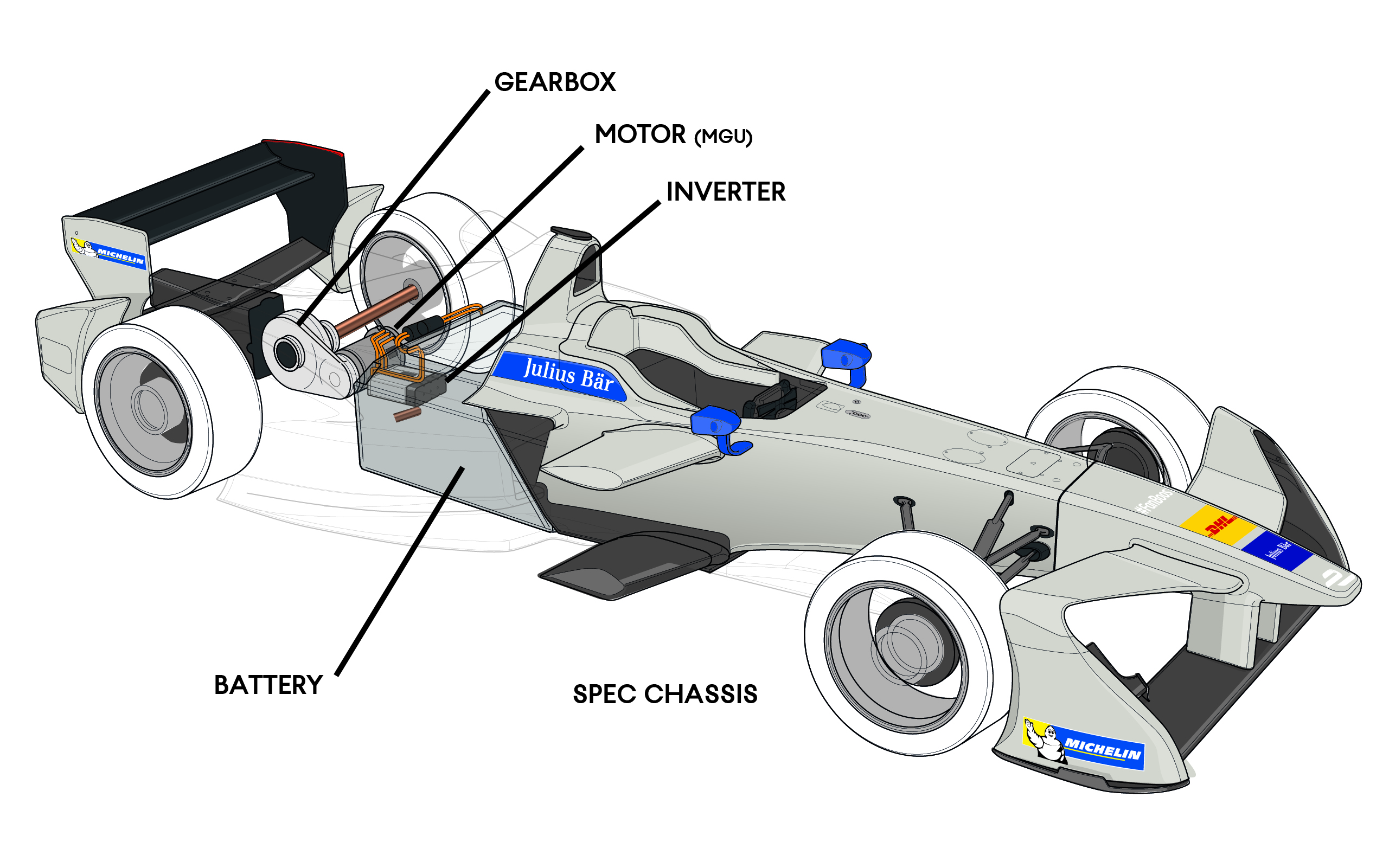
The initial battery pack could not last the 45 minute races, instead the drivers had to come into the pit garage and jump into a second car to complete the race.
In the second season, manufacturers were allowed to develop their own powertrain (motor inverter gearbox and electronics). But still, the performance and endurance was limited.
When Gen2 came along with double the battery capacity, the cars could race for the full 45-minute races on a single charge.

Gen2 also saw a jump in power output to 250 kilowatts with the same overall weight.
The next step came with the Gen3 car, this car was smaller and lighter at 856kg.
But it now came equipped with a more powerful rear motor setup and the ability to be recharged during the race.
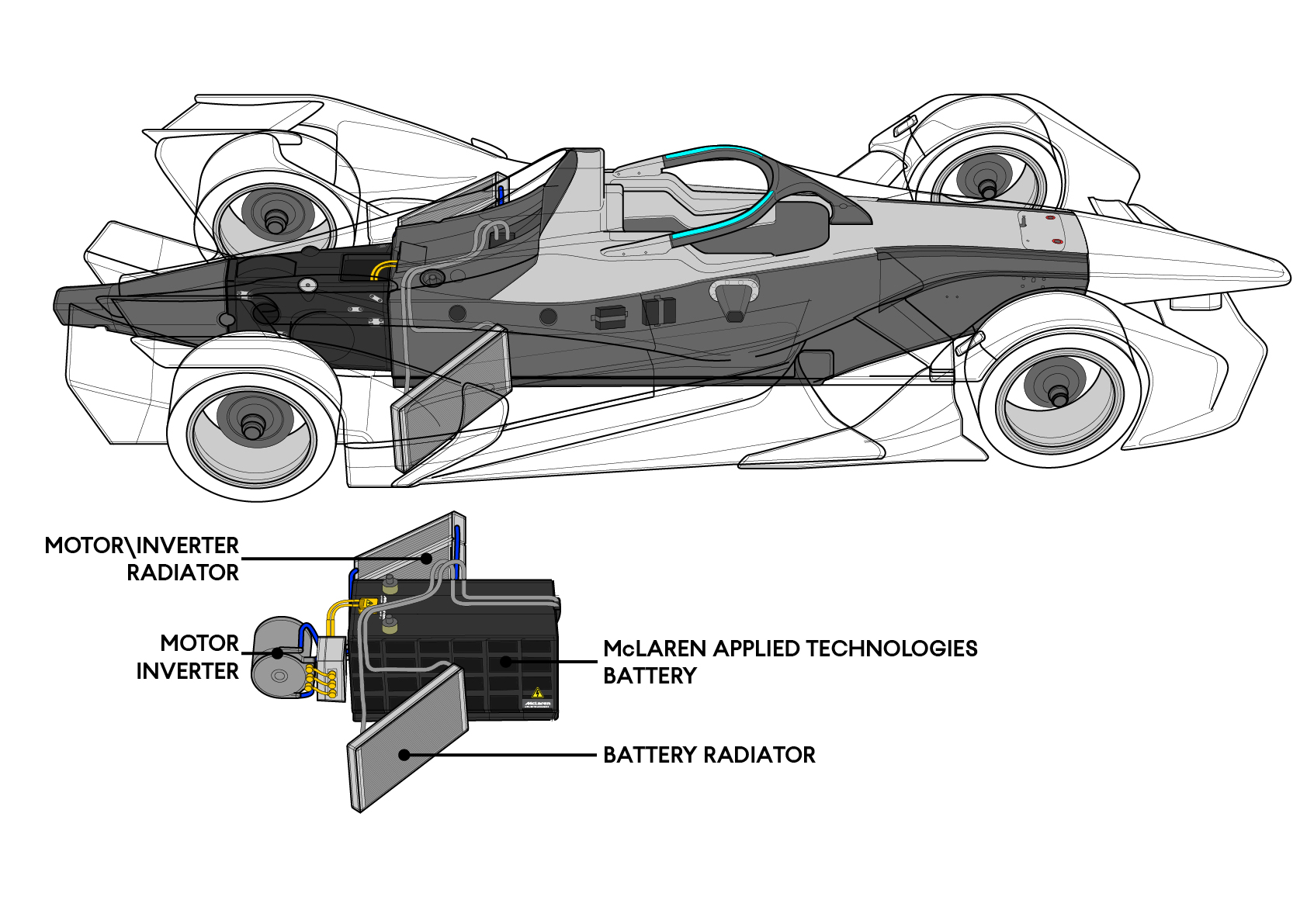
Not only this, but Formula e had the foresight to introduce a front motor/generator unit, called the front power train kit (FPK).
This was a spec unit fitted inside the front of the chassis, connected to the front wheels via short drive shafts.
Initially, this was only configured to recover energy under braking. Remembering that the front brakes do the majority of the braking effort.
Therefore, the potential to recover large amounts of energy from the front axle was a huge opportunity.
Most recently, the Gen3 Evo car, which is currently racing, is configured to use both the rear motor/generator and the front motor/generator.
Currently the full 350kw power output from both motors is only used in qualifying and in attack mode during races.
Thus, the car races with a lower power output from the rear motor only, therefore, in two-wheel drive mode.
Gen4 spec
When the next season kicks off later this year, the Gen4 car will be raced for the first time.
The previous gaps between generations gave smaller increments in performance and allowed Formula E to continue to race on very tight temporary street tracks.
 It was always part of its initial DNA, to bring electric motorsport into urban areas.
The thinking being that there are more people in cities that could be excited by motorsport, than dedicated motorsport fans.
This was sympathetic to the electric format, where the one-day routine and lesser powered cars could race silently around street tracks, without fear of environmental activism interfering with them racing.
With the category’s ever growing power output, Gen4 now tips the balance from being a technology incubator to a fully blown top performance racecar.
With the Gen4 car comes a more powerful rear motor/generator unit and a new front motor/generator unit, totalling 600 kilowatts, and permanent all drive format.
This level of performance has required other changes to the car. Thus, the new car is longer and heavier than the Gen3. Now tipping the scales at 1012kg.
 This is partly due to the larger battery to support the extra power unit and also a change in layout of the front power train kit.
To transfer all of this extra torque to the track, there is a change in both tyre supplier and format.
Since Gen1, the sport has run all weather grooved tyres. Sparing the outright performance of slicks for the environmental thought of shipping both slick and wet tyres all around the world.

Previously, most of the time, only half of them would be used. But now, the performance level is such that a ‘slick’ tyre will now be produced by Bridgestone.
Not strictly ‘slick’, as it does have some grooves made into it.
Not for rain purposes, but as Formula E has never raced with tyre warmers, a lightly grooved tyre has better warm up from the movement of the tread blocks.

There will now be wet tyres allocated to the teams for all races.
Pushing the tyres onto the track will be aided by greater downforce. Formula E cars have always raced with minimal rear wings and instead focus on large diffusers under the car.
The Gen4 car therefore has a much larger floor, reaching almost to the front tyres. There is now also a conventional rear wing fitted.
 Additionally, there will be a choice of two downforce levels included in the spec bodywork package provided by Formula E.
As standard, there will be the low-downforce/low-drag set up, aided by fairings around the front wheels and ahead of the rear wheels.
But this can be switched to a high downforce set up by the simple means of a slotting in a rear wing flap and opening the front wheel fairings, to direct air over a drive plane.
Where does Formula E go now?
With a power to weight ratio similar to that of a Formula 2 or Super Formula car, this raises the question, “Has Formula e now outgrown some of its tighter circuits?”
The answer is yes. However, the sport isn’t entirely ready to give up its city centre racing format entirely.
So the series will now race at shorter, tighter, permanent circuits such as the Jarama circuit in Spain, that was raced at early this year.
Similar circuits such as Brands Hatch in the UK are being suggested as future venues.
It’s thought that tighter city tracks, and in particular the London semi indoor venue, will most likely be unsuited to the Gen4 cars performance.
Battling for position between Nico and JEV ⚔
️#MonacoEPrix #FormulaE pic.twitter.com/FUvZaheMrk— Formula E (@FIAFormulaE) May 18, 2026
Monaco or bust?
Monaco is an anachronism for any series to race at yet remains one of the classic races for Formula 1 and junior Formulae too.
Formula E now races at the full grand prix circuit at Monaco, giving rise to obvious comparisons on Formula 1 and Formula 2 car pace.
But with the Gen4 car having slightly less power and slightly more weight than Formula 1, does its size and traction advantage outweigh the power to weight, tyre and downforce of a Formula 1 car around the principality?
Simulations and driver opinions suggest that in the dry the Gen4 will probably not outperform a Formula 1 car over a single lap but probably will outpace a Formula 2 car.
But in damp to wet conditions, the traction advantage of the Gen4 is widely believed to tip the balance in the favour of the full electric power train car.
So, could a Formula E car ever outperform Formula 1?
That may well come with subsequent iterations of the EV race car. There will be a Gen4.5 version and subsequently an all new Gen5 car.
The specifications for either are still subject to discussion. Just as are Formula1’s future development plans, from the current 1000 horsepower, 50/50 hybrid regulations.
 Formula E will maintain a spec chassis, with far simpler aerodynamics and suspension.
Therefore, at high-speed tracks, it’s always likely to lag behind the prototype Formula 1 car.
But its advantage lies in its torque, all-wheel drive and also its new frontier, active front and rear differentials.
With the potential not only for torque vectoring, but also left to right biased regen braking, helping rotate the car into a corner, something Formula 1 banned back in the 2000s.
So, at specific tracks, it is entirely likely Formula E could outperform Formula 1 in the future!
TAKE THE FE TRACK TO YOUR HOME WITH THE ULTIMATE RIGS FROM FANATEC


 Anthony Durkin

 Motorsport Technology